How Digital Learning Is Transforming Schools in Pakistan
Introduction: A New Era of Learning in Pakistan
In recent years, Pakistan’s education sector has undergone a noticeable transformation—thanks to digital learning. From multimedia classrooms to online assignments, the shift toward technology-based education is reshaping how students learn and how teachers teach. Schools in Lahore, Karachi, Islamabad, and even smaller cities are increasingly adopting digital tools to promote interactive learning, improve academic performance, and prepare students for a modern digital world.
Digital learning is no longer a luxury—it is becoming a necessity for schools aiming for academic excellence. This article explores how digital learning is changing Pakistani classrooms, its benefits, challenges, and the future ahead.
1. Modern Classrooms With Smart Technology
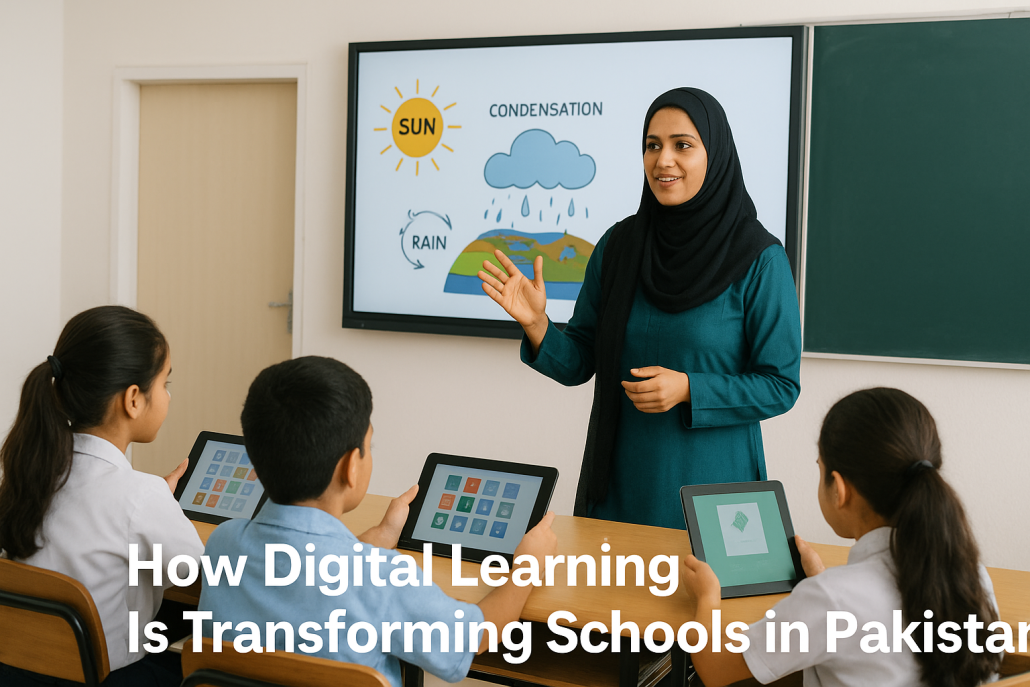
Many schools in Pakistan, especially in major cities like Lahore, have begun integrating smart technologies such as:
Smartboards and digital projectors
Interactive educational videos
Classroom management software
Digital attendance systems
Tablets and laptops for students
These tools help teachers deliver lessons more creatively and visually. For example, science experiments that were once difficult to demonstrate in traditional classrooms can now be shown easily through animations and video simulations. This makes learning more engaging and easier to understand.
2. E-Learning Platforms Supporting Remote and Hybrid Education
Platforms like Google Classroom, Microsoft Teams, Edmodo, and Zoom became extremely popular during the COVID-19 pandemic. Even after schools reopened, many institutions continued using them for:
Sharing homework
Uploading lecture videos
Online quizzes and assignments
Parent-teacher communication
Digital grading
E-learning has improved accessibility for students who miss school due to illness or travel. Instead of falling behind, they can log in and continue learning from home.
3. Students Becoming More Independent Learners
Digital learning encourages students to take responsibility for their own education. With access to:
Educational websites
Learning apps
YouTube academic channels
Online libraries
E-books
Students can explore topics beyond the classroom. They develop research skills, critical thinking, and problem-solving abilities.
This independence prepares them for college life and future careers, where self-learning is essential.
4. Teachers Becoming More Effective With Technology Tools
Digital tools help teachers:
Track student attendance and performance
Create engaging multimedia lessons
Use AI-powered learning analytics
Provide quick feedback
Automate repetitive tasks such as grading quizzes
Technology reduces teacher workload and allows them to focus more on personalized student support. Many teachers report that students show better retention when lessons are supported by digital visuals and interactive content.
5. Enhanced Communication Between Schools and Parents
Parent engagement is crucial for student success. Digital platforms now allow:
Instant messaging with teachers
Online progress reports
Attendance notifications
Fee reminders
Exam schedules and updates
Schools in Lahore and other cities have adopted mobile apps for smooth communication. This increased transparency builds trust and strengthens the school-home relationship.
6. Digital Learning Helps Bridge Educational Gaps
One of Pakistan’s biggest challenges is inequality in the education system. Digital education helps:
Reach students in remote areas
Provide free or low-cost online courses
Give underprivileged students access to the same resources as private school students
Support students with learning disabilities through specialized tools
Government and private initiatives, such as “Teleschool” and digital skill programs, have significantly improved educational accessibility.
7. Challenges Schools Still Face
Although digital learning is progressing fast, some challenges remain:
Limited internet access in rural areas
High cost of devices
Lack of teacher training
Dependence on stable electricity
Cybersecurity issues
However, with ongoing investment and improved infrastructure, these challenges are gradually being resolved.
8. The Future of Digital Learning in Pakistan
In the next five to ten years, we can expect:
Fully digitized classrooms
Use of AI tutors and virtual reality labs
Online exams with smart monitoring
National digital libraries
More hybrid schools combining online and offline learning
Pakistan is moving toward a modern education system that prepares students for the global digital economy.
Conclusion
Digital learning is revolutionizing schools in Pakistan. It has improved classroom engagement, strengthened teacher efficiency, enhanced communication, and made education more inclusive. Schools that embrace technology are giving students the tools and confidence they need to succeed in an increasingly digital world.
As Pakistan continues to evolve, digital learning will remain at the heart of educational progress—empowering students, teachers, and communities nationwide.